INCT GmbH
Blog Details
Is the Torsional Rigidity of a Planetary Gearbox Sufficient for High-Speed Start-Stop Motion in Lithium-Ion Battery Equipment?
2026-10-16
In lithium-ion battery equipment such as winding, stacking, die-cutting, slitting, and high-speed material handling systems, servo systems must frequently start and stop, reverse rapidly, and achieve precise positioning within a short cycle time.
During gearbox selection, engineers typically focus on the gear ratio, rated torque, peak torque, and backlash. However, even when these specifications appear to meet the application requirements, problems such as long settling times, vibration at the load end, or unstable operation at high speeds may still occur after installation.
In such cases, in addition to checking servo parameters and mechanical installation, another frequently overlooked specification should be evaluated: torsional rigidity, also known as torsional stiffness.
What Is the Difference Between Torsional Rigidity and Backlash?
Both backlash and torsional rigidity can cause angular displacement between the input and output, but they are not the same.
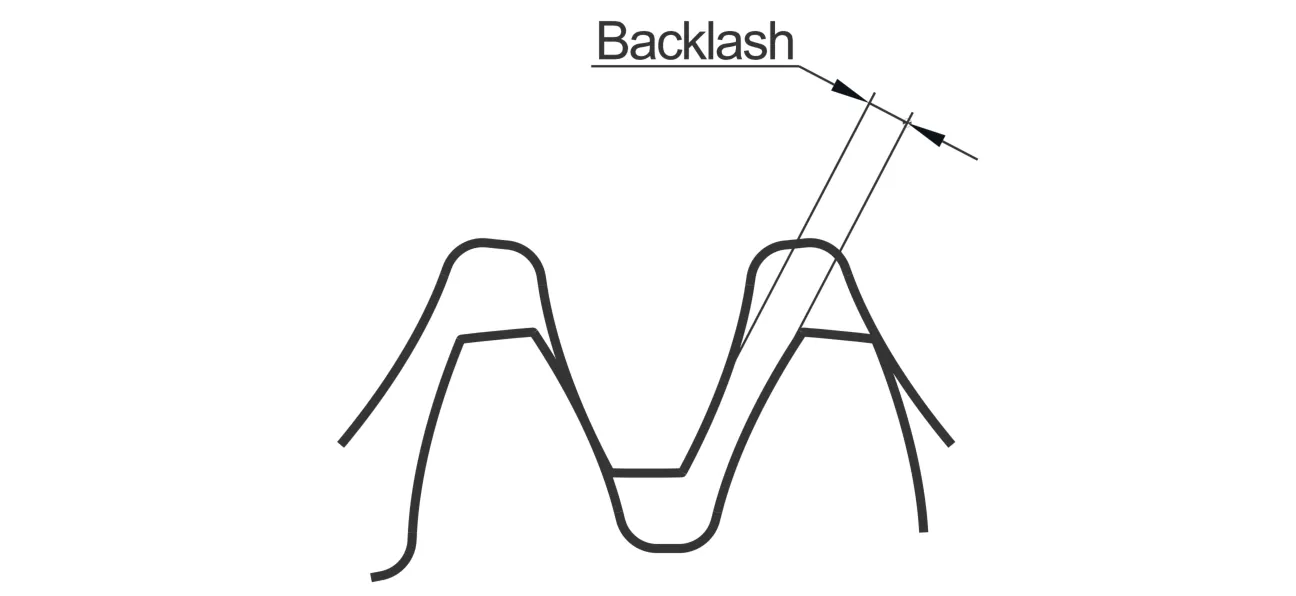
Backlash: Lost Motion During Reversal
Backlash mainly results from gear tooth clearance, bearing clearance, and fit clearances between components. When the motor changes direction, the input may begin moving while the output remains stationary until the internal clearance has been taken up.
The effects of backlash are particularly noticeable in:
• High-frequency reversing mechanisms
• Indexing and positioning systems
• Machine vision inspection platforms
• Reciprocating servo mechanisms
• Equipment with frequent changes in load direction
Simply put, backlash determines how much lost motion occurs during reversal.
Torsional Rigidity: Elastic Deformation Under Load
The gears, shafts, planet carrier, and bearings inside a gearbox are not perfectly rigid. When transmitting torque, these components undergo slight elastic deformation, creating an angular displacement between the input and output.
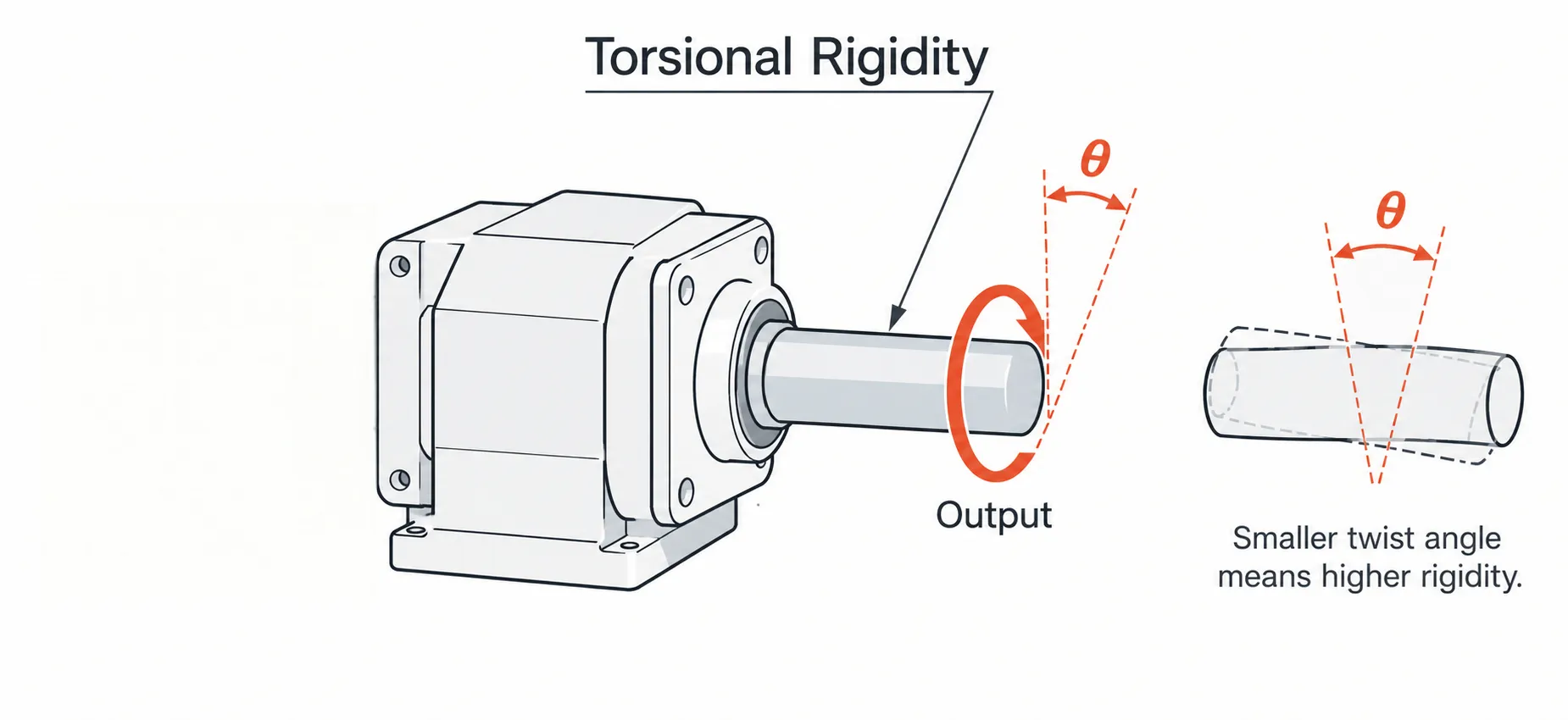
The higher the torsional rigidity, the smaller the deformation under the same load. With lower rigidity, the positional lag at the load end becomes more significant.
Torsional rigidity therefore determines how much the gearbox twists under load.
A gearbox may have very low backlash but still lack sufficient torsional rigidity. Evaluating only the “low-backlash” specification does not provide a complete picture of its dynamic performance under high-speed start-stop conditions.
Why Does High-Speed Start-Stop Motion Place Greater Demands on Rigidity?
During constant-speed operation, a gearbox mainly transmits process loads and overcomes frictional resistance. During rapid acceleration and deceleration, it must also withstand the dynamic torque generated by load inertia.
The faster the machine cycle, the greater the load inertia, and the shorter the acceleration time, the higher the instantaneous torque acting on the gearbox is likely to be. These torque fluctuations cause repeated elastic deformation and recovery throughout the drivetrain.
Under these conditions, the gearbox and load may behave like a spring-mass system. If rigidity is insufficient, oscillation, overshoot, or extended settling time may occur after high-speed acceleration or deceleration.
This also explains why some machines operate normally during low-speed commissioning but begin to exhibit vibration and positioning instability when the production speed is increased. The gearbox may be capable of driving the load, but it may not be rigid enough to limit deformation under dynamic operating conditions.
How Can You Determine Whether Rigidity Is Sufficient When Load and Acceleration Change?
The torsional rigidity of a planetary gearbox cannot be evaluated solely by checking whether its rated torque meets the application requirements. The machine’s actual motion profile must also be considered.
1. Compare Positioning Performance Under Different Loads
Test the system under no-load, normal-load, and maximum-load conditions, and observe whether the positional deviation at the load end changes significantly.
If the motor-side position feedback remains normal but the end-position error increases with the load, the drivetrain may be experiencing significant elastic deformation.
However, this deformation may not come entirely from the gearbox. The coupling, timing belt, output shaft, mounting plate, and machine frame may also contribute.
2. Compare Performance at Different Acceleration and Deceleration Rates
Within safe operating limits, reduce the acceleration rate and observe whether vibration, overshoot, and settling time improve significantly. Then gradually increase the acceleration rate and record changes in the load-side response.
If higher acceleration results in greater positioning error, mechanical vibration, or longer settling time, the following factors should be examined:
• Torsional rigidity of the gearbox
• Load inertia and motor inertia matching
• Rigidity of the coupling and output structure
• Deformation of the machine frame and mounting surface
• The relationship between the system’s natural frequency and the motion profile
This type of comparative test provides more useful information than observing the system only during constant-speed operation.
3. Observe Both Reversal and Same-Direction Loading
If the error mainly occurs at the moment of reversal, backlash and connection clearances should be checked first.
If positional deviation increases whenever the load or acceleration rises—even without a change in direction—the issue is more likely related to torsional rigidity and deformation of the overall mechanical structure.
In actual equipment, backlash and elastic deformation often occur simultaneously. A single parameter cannot explain every positioning error.
4. Monitor Settling Time After Positioning
In stacking, machine vision inspection, and high-speed pick-and-place mechanisms, the system must not only reach the target position but also settle quickly.
If the servo system indicates that the target position has been reached while the end mechanism continues to oscillate slightly, or if an additional delay is required before the next operation can begin, the mechanical drivetrain may be storing and releasing elastic energy.
Even if the final positioning accuracy remains within tolerance, excessive settling time will reduce the machine’s overall throughput.
What Problems Can Insufficient Rigidity Cause?
Positioning Error That Changes With Load
Errors caused by insufficient rigidity are not fixed. As the load increases, elastic deformation usually becomes greater. The same target position may therefore produce different results under no-load and full-load conditions. This type of variable error is also more difficult to compensate for than a fixed offset.
Vibration After High-Speed Start-Stop Motion
The gearbox, load inertia, and connected structures may form an elastic vibration system. After rapid acceleration or deceleration, the load end may experience overshoot, rebound, or periodic oscillation, extending the settling time.
Difficult Servo Tuning
When mechanical rigidity is insufficient, increasing servo gain may cause vibration or audible oscillation. Reducing the gain may alleviate these symptoms, but it also sacrifices response speed and tracking performance.
As a result, some problems that appear to be related to control parameters may actually originate from the mechanical drivetrain.
Increased Shock and Fatigue
During frequent reversing cycles, elastic deformation repeatedly stores and releases energy. If backlash is also present, an impact may occur when the clearance is taken up.
Over time, this can increase the fatigue risk for gears, bearings, couplings, and fasteners.
What Should Be Considered During Gearbox Selection?
For lithium-ion battery equipment with high-speed start-stop motion, the following factors should be evaluated together:
• Gearbox backlash and torsional rigidity
• Rated torque and permissible peak torque
• Load inertia and acceleration/deceleration time
• The manufacturer’s torque-angle characteristics
• Rigidity of the coupling, output shaft, and machine frame
• Permissible end-position error
• Maximum allowable settling time
Higher rigidity is not always better. It must be matched to the machine’s accuracy, cycle time, installation space, and cost requirements.
The objective is not merely to prevent gearbox failure, but to ensure that the entire drivetrain remains stable under maximum load and at the highest operating speed.
Conclusion
Backlash represents the lost motion that occurs during reversal, while torsional rigidity describes the gearbox’s elastic deformation under load. In high-speed lithium-ion battery equipment, low backlash solves only part of the problem. Adequate torsional rigidity is equally important for positioning accuracy and dynamic stability.
If increasing the load or acceleration causes positioning errors, vibration, overshoot, or longer settling times, adjusting the servo parameters alone may not solve the issue. The rigidity of the entire drivetrain—including the gearbox, coupling, output structure, and machine frame—should also be evaluated.
A properly selected planetary gearbox must do more than transmit the required torque. It must also limit elastic deformation to an acceptable level during high-speed start-stop motion and changing load conditions.
Need Support With Planetary Gearbox Selection?
If your lithium-ion battery equipment experiences positioning errors, vibration, overshoot, or excessive settling time during high-speed start-stop motion, frequent reversing, or changing load conditions, contact INCT. Based on your load, speed, acceleration and deceleration time, backlash, and accuracy requirements, INCT can recommend a suitable planetary gearbox and provide a tailored drive solution.
In lithium-ion battery equipment such as winding, stacking, die-cutting, slitting, and high-speed material handling systems, servo systems must frequently start and stop, reverse rapidly, and achieve precise positioning within a short cycle time.
During gearbox selection, engineers typically focus on the gear ratio, rated torque, peak torque, and backlash. However, even when these specifications appear to meet the application requirements, problems such as long settling times, vibration at the load end, or unstable operation at high speeds may still occur after installation.
In such cases, in addition to checking servo parameters and mechanical installation, another frequently overlooked specification should be evaluated: torsional rigidity, also known as torsional stiffness.
What Is the Difference Between Torsional Rigidity and Backlash?
Both backlash and torsional rigidity can cause angular displacement between the input and output, but they are not the same.
Backlash: Lost Motion During Reversal
Backlash mainly results from gear tooth clearance, bearing clearance, and fit clearances between components. When the motor changes direction, the input may begin moving while the output remains stationary until the internal clearance has been taken up.
The effects of backlash are particularly noticeable in:
• High-frequency reversing mechanisms
• Indexing and positioning systems
• Machine vision inspection platforms
• Reciprocating servo mechanisms
• Equipment with frequent changes in load direction
Simply put, backlash determines how much lost motion occurs during reversal.
Torsional Rigidity: Elastic Deformation Under Load
The gears, shafts, planet carrier, and bearings inside a gearbox are not perfectly rigid. When transmitting torque, these components undergo slight elastic deformation, creating an angular displacement between the input and output.
The higher the torsional rigidity, the smaller the deformation under the same load. With lower rigidity, the positional lag at the load end becomes more significant.
Torsional rigidity therefore determines how much the gearbox twists under load.
A gearbox may have very low backlash but still lack sufficient torsional rigidity. Evaluating only the “low-backlash” specification does not provide a complete picture of its dynamic performance under high-speed start-stop conditions.
Why Does High-Speed Start-Stop Motion Place Greater Demands on Rigidity?
During constant-speed operation, a gearbox mainly transmits process loads and overcomes frictional resistance. During rapid acceleration and deceleration, it must also withstand the dynamic torque generated by load inertia.
The faster the machine cycle, the greater the load inertia, and the shorter the acceleration time, the higher the instantaneous torque acting on the gearbox is likely to be. These torque fluctuations cause repeated elastic deformation and recovery throughout the drivetrain.
Under these conditions, the gearbox and load may behave like a spring-mass system. If rigidity is insufficient, oscillation, overshoot, or extended settling time may occur after high-speed acceleration or deceleration.
This also explains why some machines operate normally during low-speed commissioning but begin to exhibit vibration and positioning instability when the production speed is increased. The gearbox may be capable of driving the load, but it may not be rigid enough to limit deformation under dynamic operating conditions.
How Can You Determine Whether Rigidity Is Sufficient When Load and Acceleration Change?
The torsional rigidity of a planetary gearbox cannot be evaluated solely by checking whether its rated torque meets the application requirements. The machine’s actual motion profile must also be considered.
1. Compare Positioning Performance Under Different Loads
Test the system under no-load, normal-load, and maximum-load conditions, and observe whether the positional deviation at the load end changes significantly.
If the motor-side position feedback remains normal but the end-position error increases with the load, the drivetrain may be experiencing significant elastic deformation.
However, this deformation may not come entirely from the gearbox. The coupling, timing belt, output shaft, mounting plate, and machine frame may also contribute.
2. Compare Performance at Different Acceleration and Deceleration Rates
Within safe operating limits, reduce the acceleration rate and observe whether vibration, overshoot, and settling time improve significantly. Then gradually increase the acceleration rate and record changes in the load-side response.
If higher acceleration results in greater positioning error, mechanical vibration, or longer settling time, the following factors should be examined:
• Torsional rigidity of the gearbox
• Load inertia and motor inertia matching
• Rigidity of the coupling and output structure
• Deformation of the machine frame and mounting surface
• The relationship between the system’s natural frequency and the motion profile
This type of comparative test provides more useful information than observing the system only during constant-speed operation.
3. Observe Both Reversal and Same-Direction Loading
If the error mainly occurs at the moment of reversal, backlash and connection clearances should be checked first.
If positional deviation increases whenever the load or acceleration rises—even without a change in direction—the issue is more likely related to torsional rigidity and deformation of the overall mechanical structure.
In actual equipment, backlash and elastic deformation often occur simultaneously. A single parameter cannot explain every positioning error.
4. Monitor Settling Time After Positioning
In stacking, machine vision inspection, and high-speed pick-and-place mechanisms, the system must not only reach the target position but also settle quickly.
If the servo system indicates that the target position has been reached while the end mechanism continues to oscillate slightly, or if an additional delay is required before the next operation can begin, the mechanical drivetrain may be storing and releasing elastic energy.
Even if the final positioning accuracy remains within tolerance, excessive settling time will reduce the machine’s overall throughput.
What Problems Can Insufficient Rigidity Cause?
Positioning Error That Changes With Load
Errors caused by insufficient rigidity are not fixed. As the load increases, elastic deformation usually becomes greater. The same target position may therefore produce different results under no-load and full-load conditions. This type of variable error is also more difficult to compensate for than a fixed offset.
Vibration After High-Speed Start-Stop Motion
The gearbox, load inertia, and connected structures may form an elastic vibration system. After rapid acceleration or deceleration, the load end may experience overshoot, rebound, or periodic oscillation, extending the settling time.
Difficult Servo Tuning
When mechanical rigidity is insufficient, increasing servo gain may cause vibration or audible oscillation. Reducing the gain may alleviate these symptoms, but it also sacrifices response speed and tracking performance.
As a result, some problems that appear to be related to control parameters may actually originate from the mechanical drivetrain.
Increased Shock and Fatigue
During frequent reversing cycles, elastic deformation repeatedly stores and releases energy. If backlash is also present, an impact may occur when the clearance is taken up.
Over time, this can increase the fatigue risk for gears, bearings, couplings, and fasteners.
What Should Be Considered During Gearbox Selection?
For lithium-ion battery equipment with high-speed start-stop motion, the following factors should be evaluated together:
• Gearbox backlash and torsional rigidity
• Rated torque and permissible peak torque
• Load inertia and acceleration/deceleration time
• The manufacturer’s torque-angle characteristics
• Rigidity of the coupling, output shaft, and machine frame
• Permissible end-position error
• Maximum allowable settling time
Higher rigidity is not always better. It must be matched to the machine’s accuracy, cycle time, installation space, and cost requirements.
The objective is not merely to prevent gearbox failure, but to ensure that the entire drivetrain remains stable under maximum load and at the highest operating speed.
Conclusion
Backlash represents the lost motion that occurs during reversal, while torsional rigidity describes the gearbox’s elastic deformation under load. In high-speed lithium-ion battery equipment, low backlash solves only part of the problem. Adequate torsional rigidity is equally important for positioning accuracy and dynamic stability.
If increasing the load or acceleration causes positioning errors, vibration, overshoot, or longer settling times, adjusting the servo parameters alone may not solve the issue. The rigidity of the entire drivetrain—including the gearbox, coupling, output structure, and machine frame—should also be evaluated.
A properly selected planetary gearbox must do more than transmit the required torque. It must also limit elastic deformation to an acceptable level during high-speed start-stop motion and changing load conditions.
Need Support With Planetary Gearbox Selection?
If your lithium-ion battery equipment experiences positioning errors, vibration, overshoot, or excessive settling time during high-speed start-stop motion, frequent reversing, or changing load conditions, contact INCT. Based on your load, speed, acceleration and deceleration time, backlash, and accuracy requirements, INCT can recommend a suitable planetary gearbox and provide a tailored drive solution.
Prev: No Data